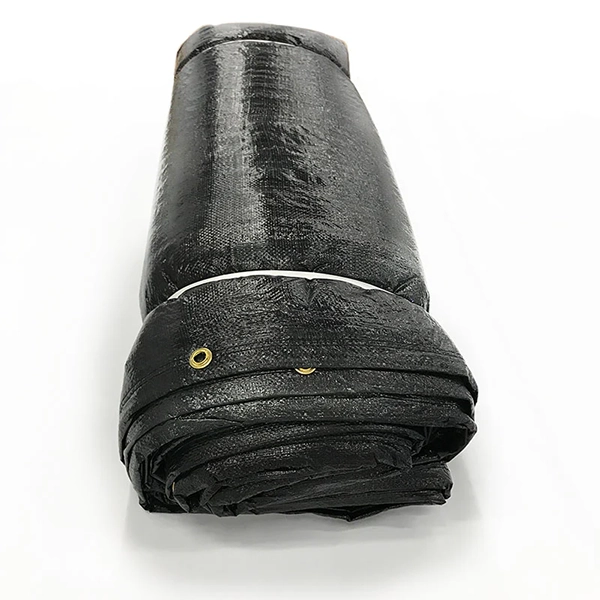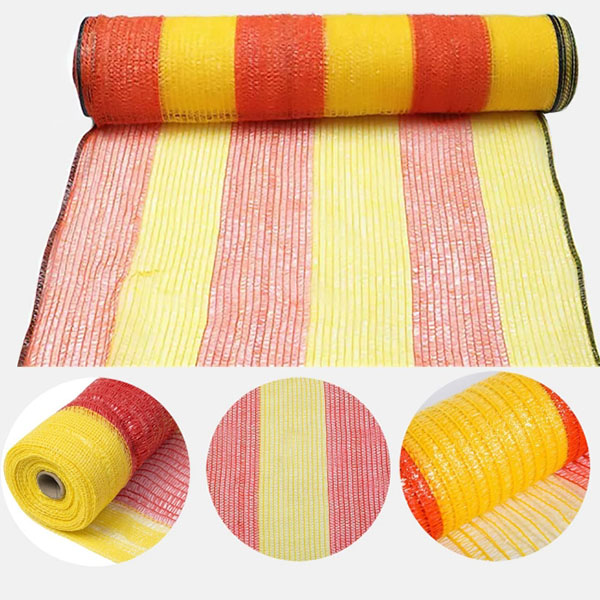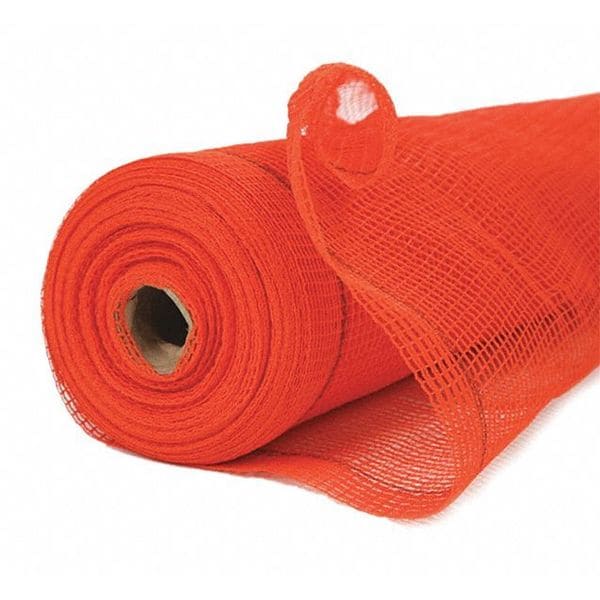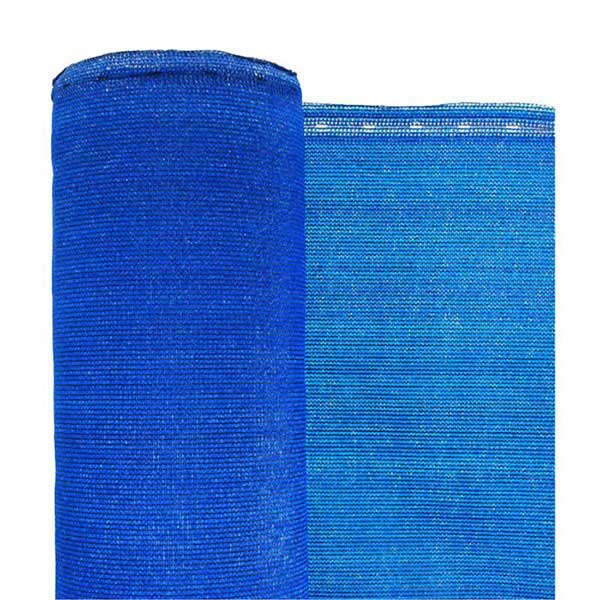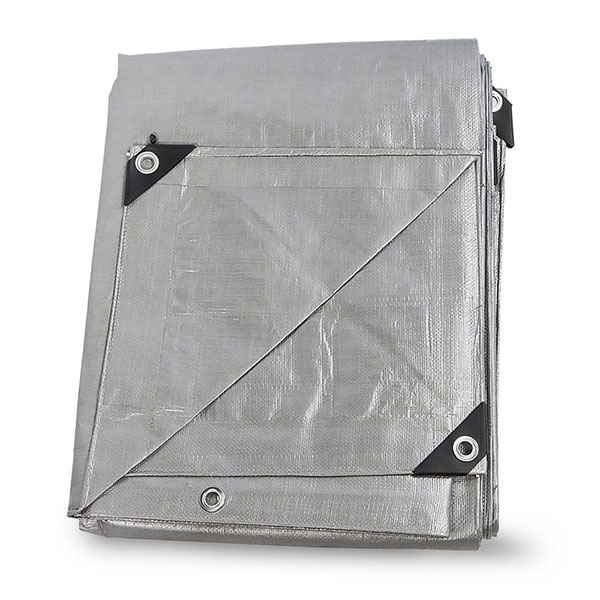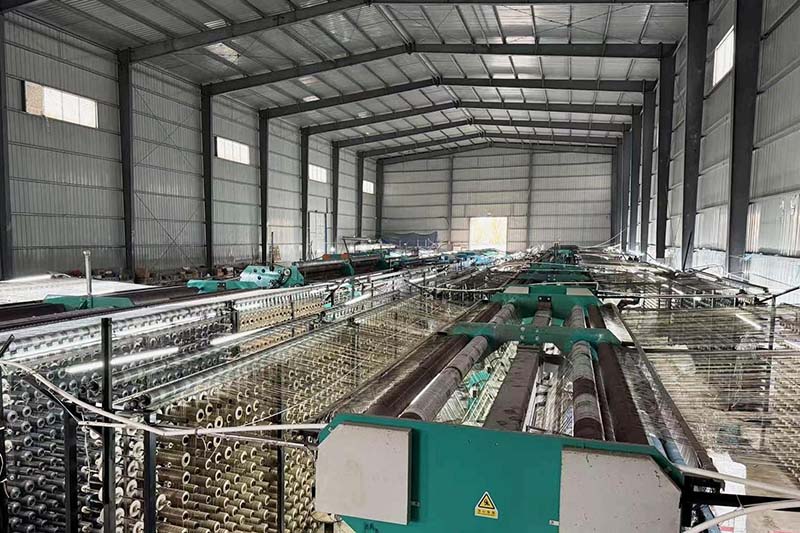
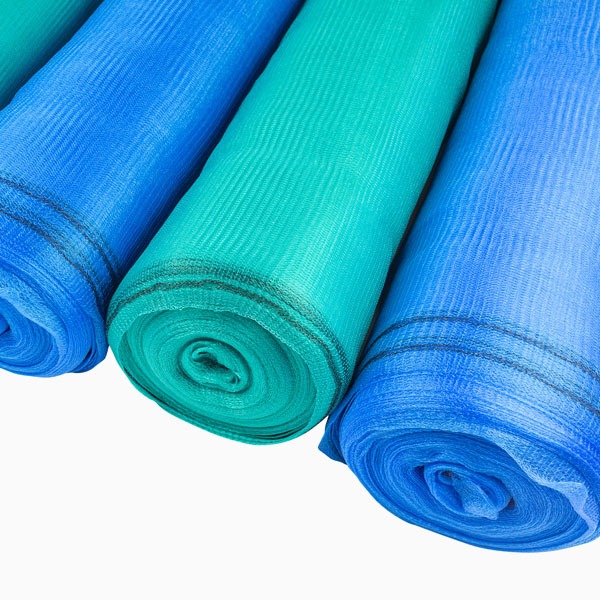
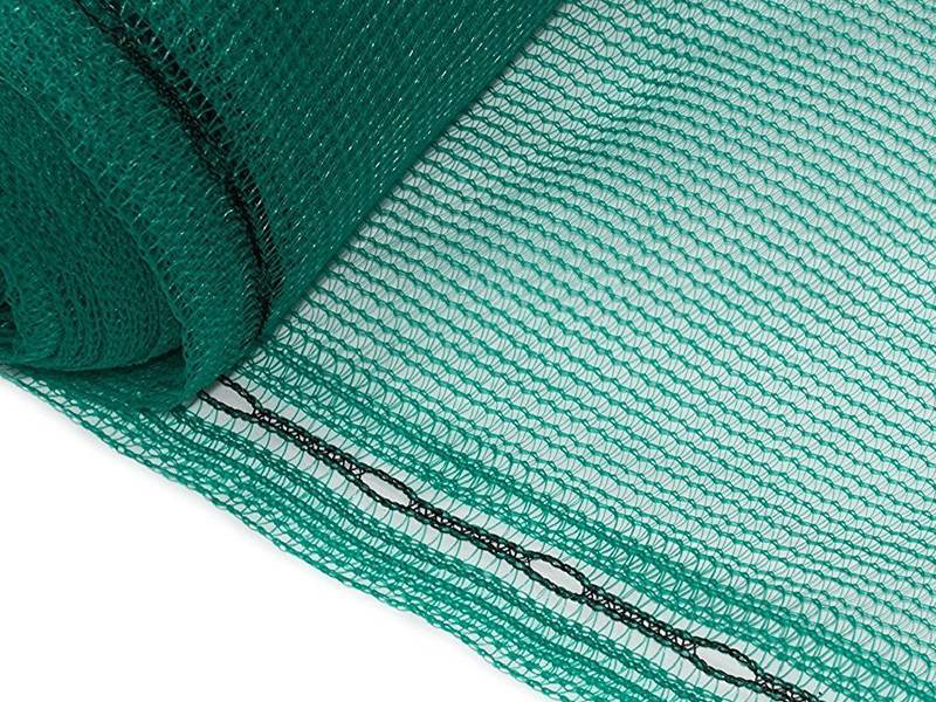
Construction netting is widely used on building sites for debris containment, scaffolding coverage, area separation, and general site protection. Because it is often installed outdoors for weeks or months, the material must withstand sunlight, wind, rain, and temperature changes without losing its basic performance too quickly.
High-density polyethylene (HDPE) is one of the most commonly used materials for construction netting. It combines low weight, flexibility, moisture resistance, and good mechanical performance. For outdoor applications, HDPE is also commonly combined with UV stabilizers to reduce the damaging effects of prolonged sunlight exposure.
Material Requirements for Construction Netting
Construction netting needs a material that can handle repeated outdoor exposure while remaining flexible enough for installation and handling. The material should resist tearing under normal tension, tolerate movement caused by wind, and maintain relatively stable properties in wet or humid conditions.
For this reason, important material requirements usually include strength, flexibility, weather resistance, consistent quality, and UV resistance. These properties help determine whether the netting can maintain reliable performance throughout the expected construction period.
HDPE for Construction Netting
HDPE is widely used for construction netting because it offers a practical balance between strength and weight. It can be processed into lightweight netting that is easy to roll, transport, unfold, and install while still providing the durability needed for outdoor construction environments.
HDPE also has low water absorption and good resistance to many common environmental conditions. During production, manufacturers can mix the HDPE resin with pigments, UV stabilizers, and other additives, allowing the material formulation to be adjusted according to the expected outdoor exposure and application requirements.
Virgin HDPE vs Recycled HDPE
Construction netting can be manufactured from virgin HDPE, recycled HDPE, or a blend of both. Virgin HDPE is newly produced resin and generally offers more consistent material properties. Recycled HDPE comes from previously processed polyethylene and may vary depending on its source, purity, and processing history.
| Factor | Virgin HDPE | Recycled HDPE |
|---|---|---|
| Material consistency | Generally higher | Depends on material source |
| Processing stability | More predictable | May vary between batches |
| Mechanical properties | Easier to control | Depends on recycled resin quality |
| Contamination risk | Lower | Potentially higher |
| Cost | Usually higher | Often more economical |
Virgin HDPE is therefore often preferred when consistent quality and predictable outdoor performance are important. However, recycled HDPE is not automatically unsuitable. Well-sorted and properly processed recycled material can also be used effectively when the manufacturer maintains good control over the formulation and finished-product quality.
UV Protection in HDPE Construction Netting
Construction netting is often exposed directly to sunlight, making UV resistance an important part of material performance. Although HDPE performs well outdoors in many respects, prolonged exposure to ultraviolet radiation can gradually weaken the polymer.
UV stabilization is used to slow this process. Properly stabilized HDPE construction netting can maintain its flexibility and mechanical properties for longer than untreated or poorly stabilized material under similar outdoor conditions.
Why HDPE Needs UV Protection
HDPE is not naturally immune to ultraviolet radiation. When construction netting remains under direct sunlight for a long time, UV exposure can gradually cause the material to age.
The effects may include fading, reduced flexibility, lower tensile strength, surface cracking, or increased brittleness. The rate of deterioration depends on factors such as sunlight intensity, temperature, exposure time, and the quality of the HDPE itself.
UV Stabilizers Used in Construction Netting
UV protection is commonly achieved by adding UV stabilizers to the HDPE during production. These additives become part of the material and help slow the damage caused by ultraviolet radiation.
Certain pigments and other additives may also contribute to UV protection. The goal is not to make HDPE permanently unaffected by sunlight, but to extend the period during which the construction netting can maintain useful strength and flexibility outdoors.
Factors Affecting UV Stabilization
The performance of UV-stabilized HDPE depends first on the type and amount of UV stabilizer used. Different stabilizers provide different levels of protection, and a higher dosage does not always mean proportionally better UV resistance. The additive level should match the resin formulation and expected exposure conditions.
Material quality is another important factor. Virgin HDPE generally provides a more consistent base, while recycled HDPE may require tighter quality control because its properties can vary. UV additives cannot fully compensate for contaminated or significantly degraded raw material.
Environmental conditions also affect performance. Strong sunlight, high temperatures, and longer exposure periods place greater stress on the polymer. Construction netting intended for long-term use in areas with intense sunlight may therefore require stronger UV protection than netting used for short-term projects.
How HDPE and UV Stabilization Work Together
HDPE provides the basic physical properties required for construction netting, including strength, flexibility, low weight, moisture resistance, and processability. UV stabilizers help preserve these properties by reducing the rate at which sunlight damages the polymer.
The two should therefore be considered together. Good-quality HDPE without suitable UV stabilization can still deteriorate quickly under prolonged sunlight, while strong UV additives cannot fully make up for poor-quality base material. Reliable outdoor construction netting depends on a balanced combination of HDPE quality and appropriate UV protection.
Frequent Askded Questions
What material is commonly used for construction netting?
HDPE is one of the most common materials used for plastic construction netting because it is lightweight, flexible, moisture-resistant, and suitable for outdoor use. UV stabilizers are often added to improve its performance under sunlight.
Is HDPE naturally UV resistant?
HDPE has good general weather resistance, but it is not completely resistant to ultraviolet radiation. Long-term sunlight exposure can gradually reduce its strength and flexibility.
Is virgin HDPE better than recycled HDPE for construction netting?
Virgin HDPE usually offers more consistent quality and more predictable mechanical performance. Recycled HDPE can also be suitable when the source material, purity, and production process are carefully controlled.
How do UV stabilizers protect HDPE?
UV stabilizers reduce the damaging effects of ultraviolet radiation on the polymer and slow the aging process that can eventually cause brittleness, cracking, fading, and loss of strength.
How does sunlight affect HDPE construction netting?
Prolonged sunlight exposure can gradually weaken HDPE. Over time, poorly protected material may lose flexibility and tensile strength and may become faded, brittle, or cracked.
Can UV stabilizers completely prevent HDPE degradation?
No. UV stabilizers slow degradation but cannot stop polymer aging permanently. The final service life still depends on sunlight intensity, temperature, exposure duration, and the overall quality of the material.
Conclusion
HDPE is widely used for construction netting because it provides the lightweight strength, flexibility, and moisture resistance required for outdoor applications. However, long-term performance depends on more than the base polymer alone.
For buyers evaluating construction netting, HDPE quality and UV stabilization should be considered together. A well-controlled material formulation can help the netting maintain its strength and flexibility for longer under outdoor construction conditions.