If you’ve ever lost a crop to heat stress in July, or watched a client’s greenhouse warp under summer load because the shading was wrong, you know the cost of getting this decision wrong. This guide cuts through the confusion — shading percentages, HDPE vs. polypropylene, knitted vs. woven — so you can make the right call the first time.
Why the Wrong Shade Net Costs More Than You Think
Most buyers focus on upfront price. But a cheap shade net that fails in 18 months doesn’t just cost replacement labor — it costs you mid-season downtime, crop loss, and credibility with clients.
Here’s what shade nets actually do when selected correctly:
- Microclimate control: A well-matched net can reduce under-canopy temperatures by 8–15°C during peak summer, cutting heat stress on fruits and leafy crops.
- Photoperiod management: Specific densities modify light intensity to trigger or delay flowering in orchids, chrysanthemums, and ginseng.
- Physical protection: A knitted HDPE net acts as a physical barrier against hail, heavy rain, birds, and soft-bodied pests like aphids and whiteflies — without the airflow restriction of solid covers.
- Water conservation: Reduced direct sun exposure lowers evapotranspiration. Field trials in high-light Mediterranean climates have recorded irrigation savings of 20–30% under 40–50% shade nets compared to open plots.
The goal is not maximum shade. It’s the right shade for your crop, climate, and structure.
The 4 Specifications That Actually Matter
1. Shading Percentage: Match It to Your Crop
Shade percentage is how much light the net blocks. Getting this wrong — even by 10–15% — can delay flowering, reduce fruit set, or cause etiolation (weak, stretched growth from insufficient light).
| Shading % | Best For | What to Watch |
|---|---|---|
| 30–40% | Lettuce, cilantro, spinach, peppers in high-light regions | Too little in very hot climates; combine with white color for maximum cooling |
| 50–60% | Nursery seedlings, orchards, most flowering crops, general greenhouse use | The most versatile range — good starting point if you’re unsure |
| 70–80% | Orchids, ferns, mushroom houses, livestock shelters | Can stunt growth if used on sun-dependent crops by mistake |
| 90%+ | Non-crop uses: shade walkways, livestock cooling areas | Not appropriate for active plant production |
Practical tip: When in doubt, buy 10% less shading than you think you need. You can always add a second layer; you can’t give light back to a crop that’s been sitting under 80% shade for two weeks.
2. Material: HDPE vs. Polypropylene, and Why It Matters Long-Term
HDPE (High-Density Polyethylene) is the industry standard for agricultural shade nets, and for good reason. Virgin HDPE with UV stabilizers resists degradation, maintains tensile strength in high-wind conditions, and holds color and porosity over years of continuous sun exposure.
Polypropylene alternatives are cheaper upfront but become brittle faster. In high-UV environments (tropical, high-altitude, or desert regions), a polypropylene net may start cracking at attachment points within 12–18 months.
What to look for on spec sheets:
- “100% virgin HDPE” — not recycled resin, which has inconsistent UV resistance
- Carbon black content of 2–3% (used as a UV stabilizer in black nets)
- UV inhibitor additives explicitly stated for colored nets (green, white, aluminet)
If a supplier can’t provide the raw material specification, treat that as a red flag.
3. Knitted vs. Woven: A Decision That Affects Installation, Longevity, and Airflow
This is one of the most misunderstood choices in shade net purchasing.
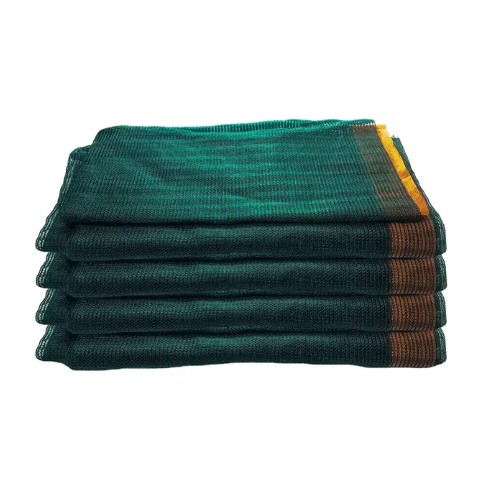
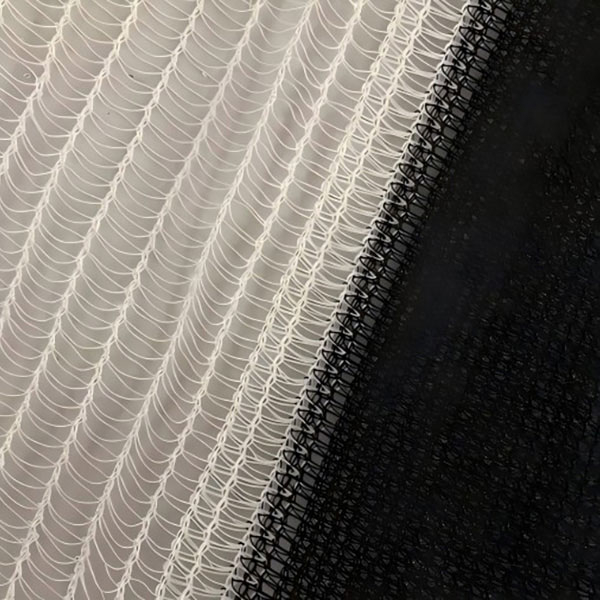
Knitted shade nets are made from looped monofilaments. They are:
- Tear-resistant: a cut or puncture does not unravel (unlike woven)
- Lightweight and flexible: easier to handle on curved or irregular structures
- Better for airflow: the open-loop structure allows hot air to escape
- The correct choice for most greenhouse applications and high-wind areas
Woven shade nets use interlaced tape filaments in a rigid grid. They are:
- Heavier and more dimensionally stable
- More prone to fraying at cut edges unless heat-sealed
- Better for fixed installations where rigidity matters (pergolas, permanent livestock shade structures, windbreak applications)
- Higher mechanical strength at the point of weave — but this advantage disappears once an edge fray begins
For greenhouse builders: specify knitted for all retractable or tensioned systems. Reserve woven for fixed perimeter windbreaks.
Learn more about knitted and woven shade nets please visit: https://www.agrishade.com/knitted-vs-woven-shade-net/
4. UV Stabilization: The Spec Nobody Checks Until It’s Too Late
A shade net without adequate UV stabilization does not gradually degrade — it fails abruptly. The monofilaments become brittle, the net tears at attachment points under normal wind load, and the structure it’s protecting is suddenly exposed.
Quality standards to look for:
- Lifespan rating of 5–10 years under continuous outdoor use, backed by a manufacturer warranty
- UV stabilizer type: HALS (Hindered Amine Light Stabilizers) are more effective than standard UV absorbers for polyolefin materials
- Test to run on samples: fold the net sharply and crease it. A UV-degraded net will crack or show white stress marks along the fold. A good net flexes.
Economy nets rated for “3+ years” in promotional materials often fail in 12–18 months in tropical or high-altitude environments where UV index regularly exceeds 10.
Shade Net Colors: What the Color Actually Changes
Shae net color affects how light is transmitted and modified, not just aesthetics.
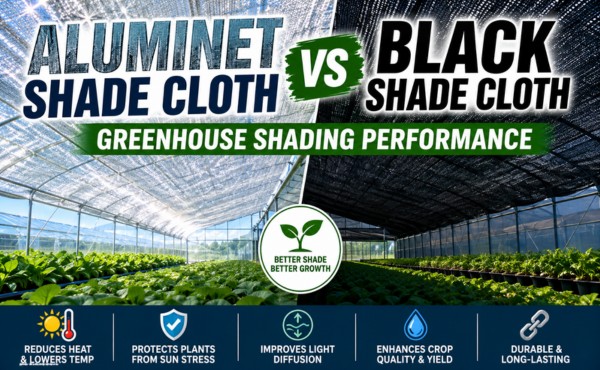
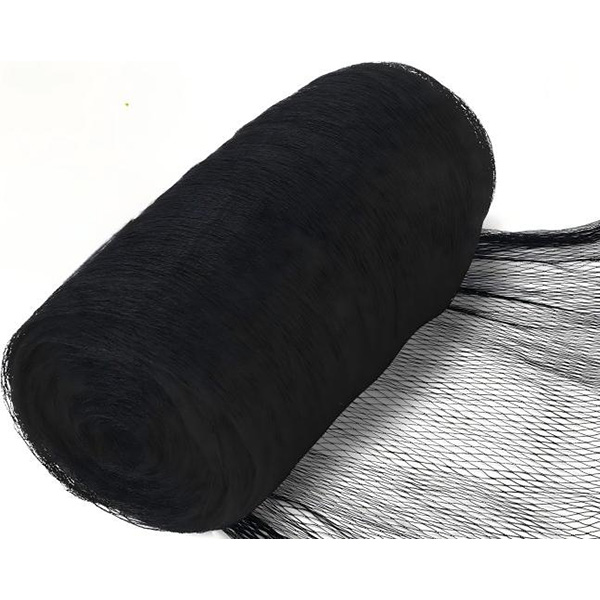
Black: The most common choice. Blocks light uniformly, provides good heat reduction, UV stable with carbon black content. Best for general production.
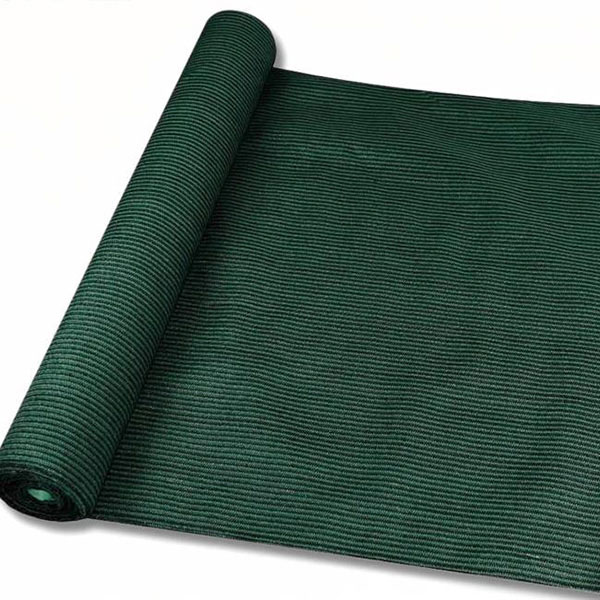
Green: Transmits light in the wavelengths plants use most efficiently for photosynthesis. Popular in nurseries and cut flower production. Slightly less effective than black at heat reduction.
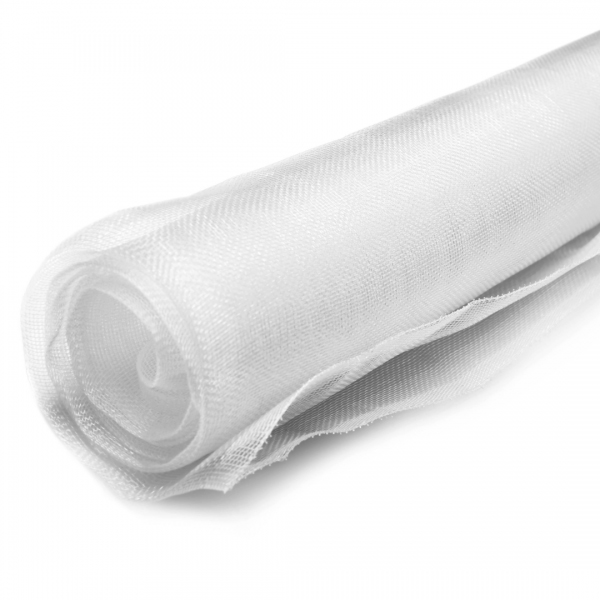
White: Reflects rather than absorbs solar radiation. Keeps the space beneath significantly cooler than black nets at the same shading percentage. Best choice in extremely hot, arid climates where heat reduction is the primary goal.
Blue: Promotes compact, stocky growth through spectral shifting. Used in propagation nurseries and ornamental production. Not a general-purpose choice.
Aluminet (reflective): The premium option. Reflects infrared radiation outward, which black nets absorb and re-radiate as heat. Provides the best combination of light diffusion and heat reduction. Higher cost, but worth it in high-value protected cropping where temperature management is critical.
For Greenhouse Builders: Structural Considerations
If you’re specifying shade nets as part of a greenhouse structure, the net is a structural element — not an accessory added at the end of the project.
Wind load: A shade net acts like a sail. At 50% porosity, a net still presents meaningful wind resistance. Ensure your support structure (galvanized steel or aluminum extrusion) is engineered for the local wind load with the net installed. This calculation changes if you switch from a 30% to a 70% net after structural design is finalized.
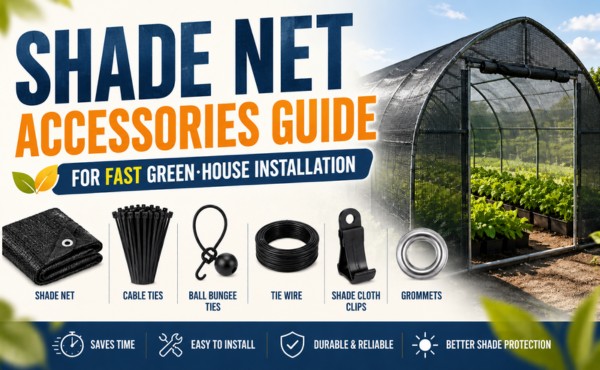
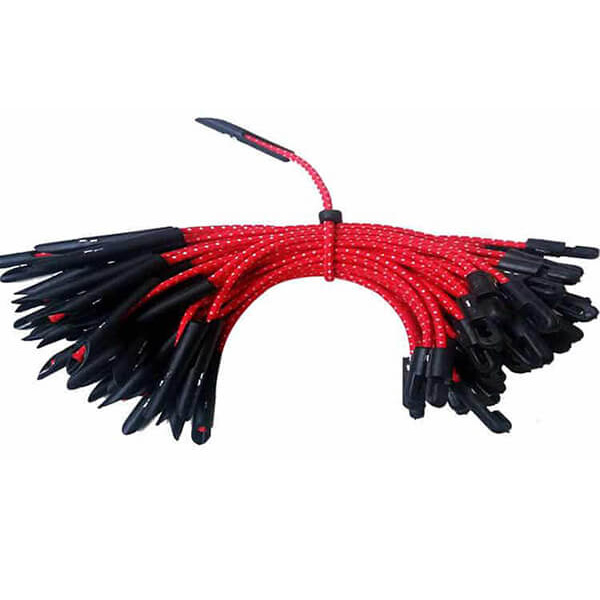
Attachment: Use stainless steel spring clips or wiggle wire channels. Plastic zip ties are a common shortcut — they degrade under UV within 6–12 months and snap under load exactly when you need them most.
Rope reinforcement: Quality nets come with a doubled hem pocket along all edges. Thread polyester rope (not nylon, which stretches) through the hem before tensioning. This distributes attachment loads across the full edge rather than concentrating stress at each clip.
The chimney gap: When installing shade nets over glass or polycarbonate, leave a 15–20 cm gap between the net and the glazing surface. This creates convective airflow that removes trapped heat. A net laid directly on glazing amplifies radiant heat transfer to the interior.
Retractable systems: For high-value crops (strawberries, tomatoes, peppers), a retractable system allows you to open the net on cloudy days to maximize photosynthesis and close it during heat events. The payback on these systems, in yield quality and energy savings, is typically 2–4 seasons depending on crop value.
Installation: What Goes Wrong and How to Avoid It
Tensioning: A loose net flaps in wind. Repeated mechanical stress at flapping points is the single most common cause of early net failure in well-specified nets. Tighten the net to eliminate visible sag, then add a small additional pull for thermal expansion in summer heat.
Orientation for fixed nets: If you can only choose one axis, orient the net to maximize morning sun exposure (for photosynthesis) and shade from afternoon sun (the most intense period). In the Northern Hemisphere, this generally means running the long axis east-west with shading on the southwest exposure.
Edge sealing for cut nets: If you need to cut a woven net to size, seal the cut edges immediately with a heat gun or edge tape. Fraying begins within weeks of installation on an unsealed woven edge.
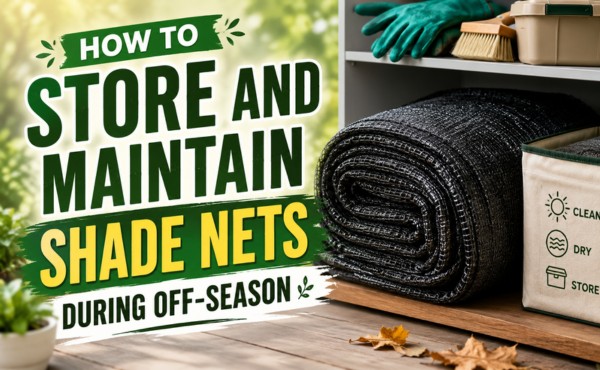
Seasonal storage: If removing nets for winter, clean them first (mild soap and water, no pressure washing), allow them to dry completely, and roll — do not fold — for storage. Fold creases weaken monofilaments at the crease line.
Cost vs. Long-Term Value: A Realistic Comparison
| Premium HDPE Net | Economy Net | |
|---|---|---|
| Material | 100% virgin HDPE, HALS UV stabilized | Recycled resin, minimal UV protection |
| Expected lifespan | 7–12 years | 1–3 years |
| Tensile strength | Rated for high-wind load | Degrades significantly after first summer |
| Manufacturer warranty | Yes | Rarely |
| Replacement cycles over 10 years | 1 (initial purchase) | 3–6 replacements |
| Total cost over 10 years | Higher upfront, lower overall | Low upfront, significantly higher overall |
The real cost of a cheap shade net isn’t the net — it’s the labor to replace it, the potential crop loss during the transition, and the structural stress from a net that fails mid-season rather than at the end of it.
FAQs
1. What shading percentage is best for tomatoes and peppers?
For field and greenhouse tomatoes and peppers in high-light regions, 30–40% is the standard recommendation. These are sun-loving crops that require strong light for fruit development. Higher shading reduces fruit set and can cause pale, elongated plants. In extreme heat climates (above 38°C regularly), a white 40% net provides better heat reduction than a black 30% net at similar light transmission.
2. Can I use the same shade net for vegetables and for a livestock shelter?
Technically yes, but the specifications differ. Vegetable nets prioritize specific shading percentages and spectral properties; livestock shelter nets prioritize strength and heat reduction. For livestock, a white or reflective 70–80% net with heavier monofilaments (to resist animals pushing against it) is a better fit than an agricultural crop net.
3. What is the difference between a shade net and a windbreak net?
They look similar but serve different functions. Shade nets are specified by light transmission percentage — the porosity is tuned to control photosynthetically active radiation. Windbreak nets are specified by wind speed reduction; they use heavier monofilaments in a denser weave to maintain shape under sustained wind pressure without collapsing. A 50% shade net and a 50% windbreak net may look identical but the windbreak net will be heavier, stiffer, and rated for a higher mechanical load.
4. How do I know if a shade net has enough UV stabilization?
Ask the supplier for the UV stabilizer specification (HALS type and loading percentage). If they can’t provide it, request a material safety data sheet or technical data sheet for the raw compound. As a field test: expose a small sample to direct sun for 60 days and then fold it sharply at a new point. A well-stabilized net will still flex; an under-stabilized one will crack or show white stress marks.
5. How often should I clean shade nets?
Twice a year is the standard recommendation: once at the start of the growing season and once before storage. Use mild soap and lukewarm water. Avoid high-pressure washers, which stretch knitted nets and push particles deeper into the weave. Algae and dust buildup reduce effective light transmission by 5–12% over a season, which can meaningfully affect crops in the 50–60% shading range.
If you have specific questions about shade net specifications for your crop or structure, our technical team is available to review your requirements and recommend the right product.