If you manage a commercial farm, shade netting is not just a way to block sunlight. It is a production tool that helps regulate canopy temperature, reduce crop stress, improve marketable yield, and protect quality during hot periods. The challenge is that there is no one-size-fits-all option. A net that works well for leafy greens in midsummer may reduce performance in fruiting crops that still need strong light for sizing and color.
For large-scale operations, the right choice comes down to four factors: shade percentage, net color, structure type, and expected return on investment. This guide focuses on those decisions so growers can match the system to crop needs, local climate, and budget.
1. Start With Shade Percentage, Not Price
Shade percentage determines how much incoming light is reduced. In practical terms, it affects leaf temperature, evapotranspiration, fruit exposure, and overall plant vigor. Choosing too little shade may leave crops exposed to heat and sunburn. Choosing too much can reduce photosynthesis, slow growth, and lower yields.
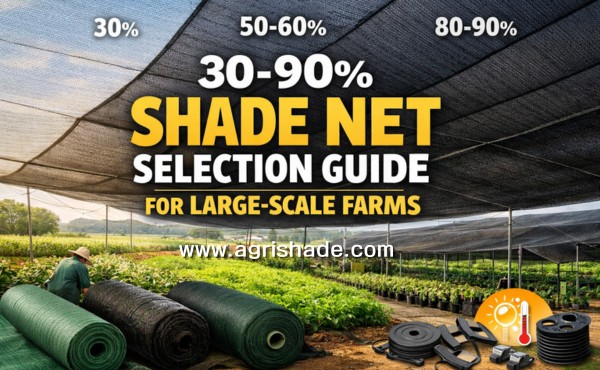
30% to 50% shade
This range is usually the safest starting point for fruiting vegetables such as tomatoes, peppers, cucumbers, eggplant, and beans. It works well where the goal is to reduce heat stress without sacrificing too much light. In temperate regions, high-elevation farms, and spring-to-fall production systems, this range often provides the best balance between protection and continued crop development.
For peppers and tomatoes, moderate shade is commonly used to limit fruit sunscald, reduce midday stress, and improve packout quality. It is also easier to manage than heavier shade because it preserves more flexibility across changing weather conditions.
50% to 70% shade
This range is often better suited for leafy greens, herbs, brassicas, strawberries, and nursery crops grown during warm or humid seasons. These crops usually benefit more from lower canopy temperature and reduced transpiration than from maximum light intensity. In hotter summer conditions, moderate-to-heavy shade can help delay bolting, reduce leaf burn, and improve visual quality.
For growers in transition climates or regions with strong summer heat, this category is often the most practical for primary summer production.
70% to 90% shade
Heavier shade is typically reserved for specialty crops and non-field uses, such as orchids, propagation areas, mushrooms, ginseng, and livestock shade structures. In vegetable production, this level is usually too high for full-season use unless the crop has very low light requirements. However, it can be useful in desert climates, for temporary heat-wave protection, or in highly sensitive propagation environments.
Decision rule: If you are growing high-value vegetables and are unsure where to begin, a 50% net is often the most flexible starting point for field evaluation.
2. Shade Net Color Changes the Growing Environment
Many buyers choose netting by shade percentage alone, but color matters because it influences both heat behavior and light distribution under the canopy.
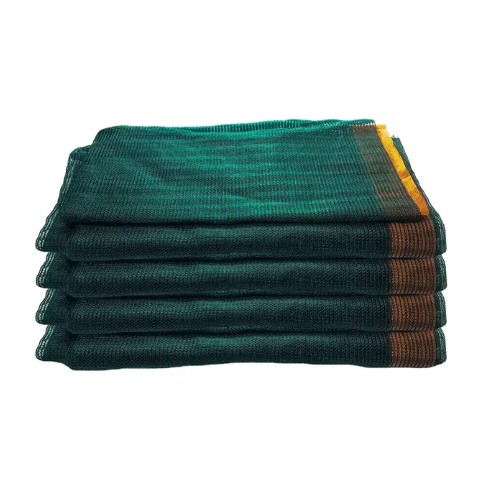
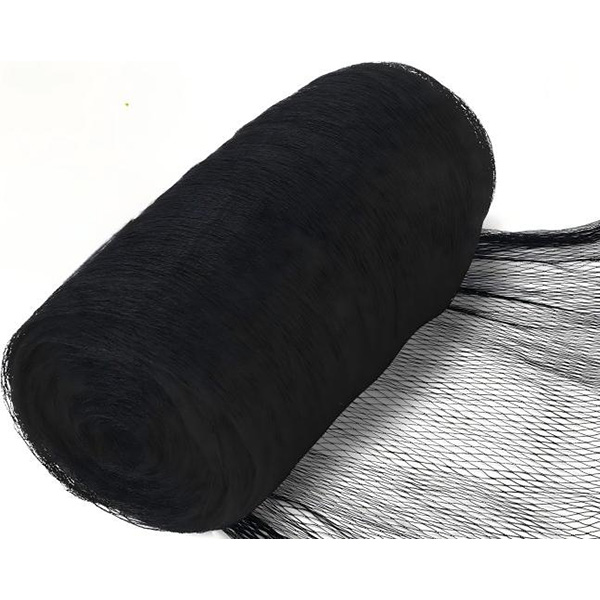
Black netting
Black shade net is widely used because it is economical, easy to source, and effective at creating shade. It is often suitable for temperate climates and general-purpose agricultural use. However, in very hot regions, black netting can absorb more solar radiation and may contribute to a warmer environment if airflow is poor.
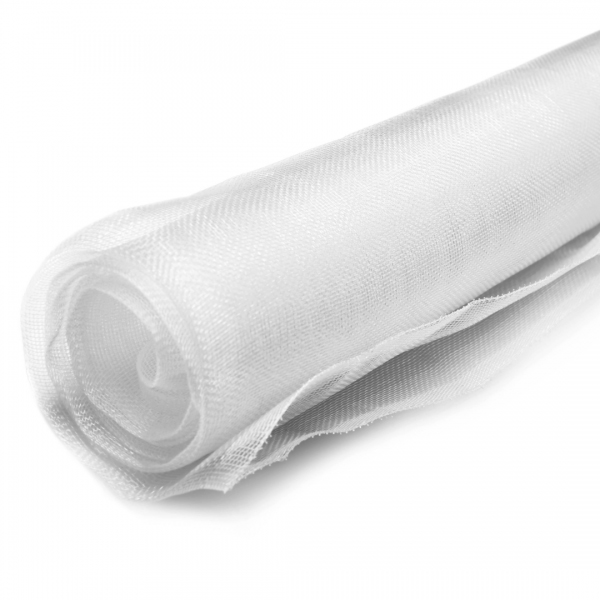
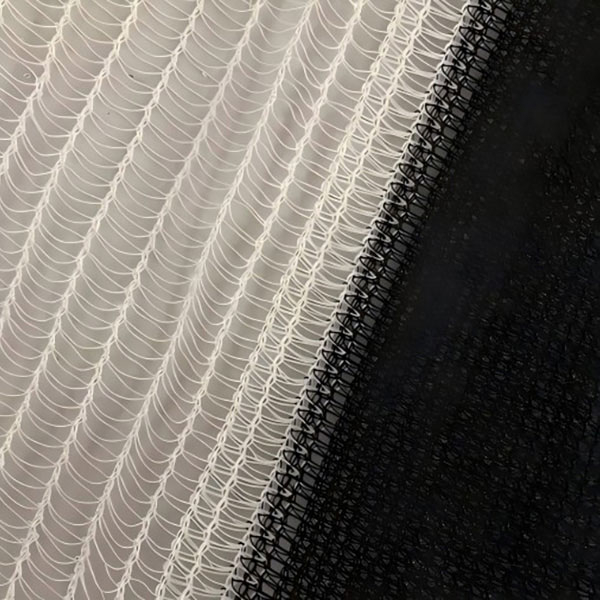
White or reflective netting
White and reflective materials are popular where heat management is the main goal. Instead of simply absorbing radiation, they reflect more sunlight and often create a brighter, more diffused light environment under the structure. This can be beneficial for trellised vegetables and crops where lower-canopy light penetration matters.
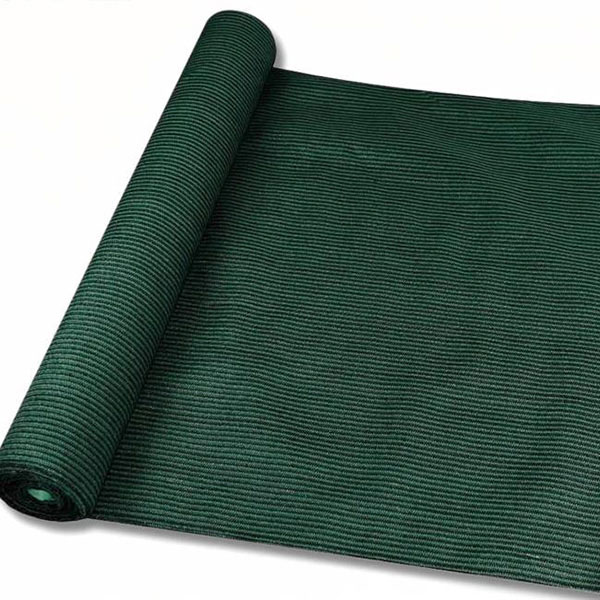
Silver or grey netting
Silver and grey options are commonly used in higher-value production systems. Growers often choose them when they want a balance of shading, heat reflection, and more even light spread. In some operations, reflective surfaces are also used as part of broader insect pressure management, though performance depends on crop, layout, and regional pest conditions.
Practical rule: In hot climates, reflective or lighter-colored netting is usually a better choice than black. In milder climates, black remains a cost-effective option.
3. Match the System to Climate and Crop Stage
The same crop may need different shade strategies depending on location and timing. A tomato grower in the Northeast may only need moderate summer protection, while a grower in Arizona or inland California may need a more aggressive heat-management strategy.
It also helps to think by crop stage. Young plants, transplants, and newly established fields often benefit from more protection than mature crops. During extreme heat events, temporary or retractable coverage can protect quality without forcing the crop to stay under reduced light all season.
For this reason, commercial farms should avoid treating shade netting as a generic input. It works best when selected around a specific production window: transplant establishment, midsummer fruit protection, nursery hardening, or livestock cooling.
4. Understand the Real Cost Per Acre
For commercial farms, the total investment includes much more than the fabric itself. The main cost categories are:
- Netting material
- Support structure
- Installation labor
- Repairs and replacement cycle
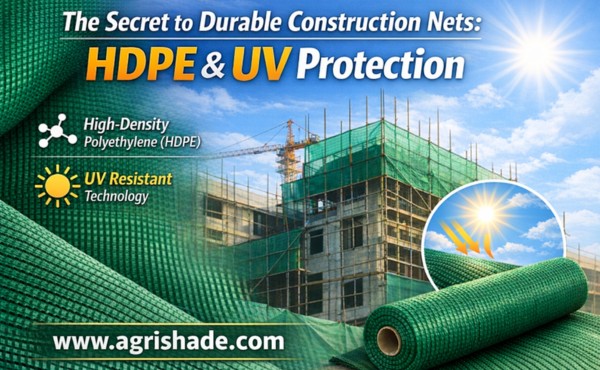
HDPE netting with UV stabilization is the industry standard for agricultural use. Net cost varies depending on weight, color, and shade percentage, but the larger budget driver is usually the support structure. For semi-permanent and permanent systems, post spacing, cable design, wind rating, and anchor requirements can change the project cost significantly.
A lower-cost net on a weak structure is rarely a bargain if it fails in wind or requires frequent replacement. For multi-acre farms, the better question is not “What is the cheapest net?” but “What system gives me the lowest cost per marketable unit over multiple seasons?”
5. Fixed vs. Retractable Structures
Fixed systems
Fixed shade structures are simpler and generally less expensive. They are often a good fit for orchards, long-season crops, and operations where consistent shading is needed throughout the hottest months.
The downside is reduced flexibility. On cooler or cloudy days, the crop still receives reduced light, whether or not protection is needed.
Retractable systems
Retractable or roll-up systems cost more upfront, but they give growers much more control. The net can be opened during mild weather and deployed during heat spikes, sunburn risk periods, or sensitive crop stages. For high-value vegetable production, this flexibility often justifies the extra investment, especially in variable climates.
If the operation grows multiple crops or rotates fields seasonally, retractable systems can provide a better long-term return than fixed coverage.
6. Installation Details Affect Performance
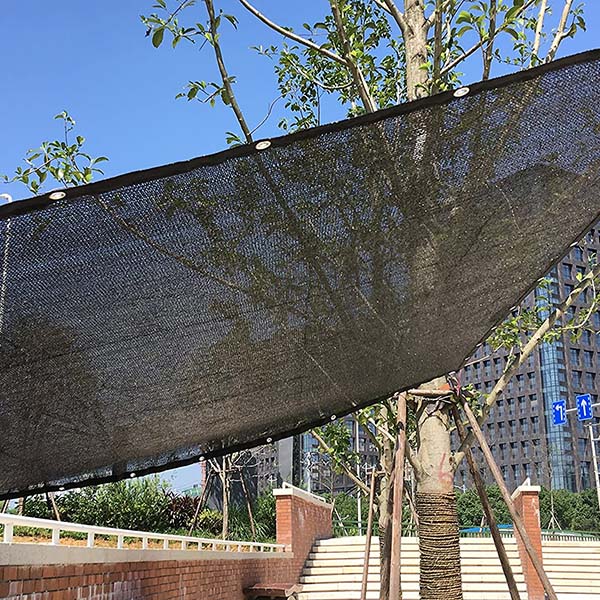
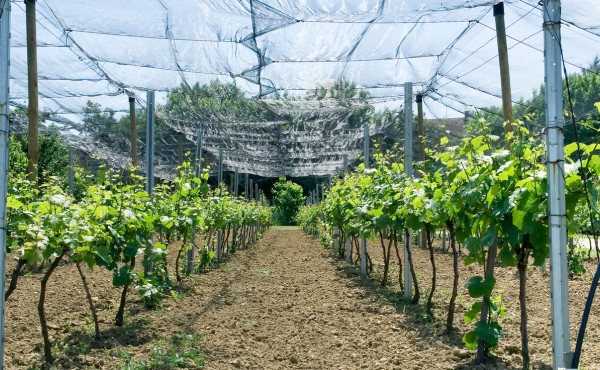
Even good netting performs poorly when installed incorrectly. One of the most common mistakes is placing the net too close to the crop canopy. Without enough airspace, heat can build up under the structure and reduce the intended benefit.
For most commercial setups, maintaining adequate clearance above the crop is critical for convective airflow. Wind loading must also be considered from the start. Farms in open plains, hurricane-prone regions, or coastal zones should use stronger posts, proper footings, reinforced edges, and reliable tensioning hardware.
Custom-width netting can also reduce field labor, waste, and seam failure. Before ordering, it is worth checking whether the supplier can match the fabric width to your post layout.
7. How to Think About ROI
The return on shade netting usually comes from a combination of factors rather than one single gain:
- Less fruit sunburn and heat damage
- Better visual quality and packout
- Lower plant stress during extreme weather
- More stable production in sensitive seasons
- Reduced risk of quality losses that affect market price
On high-value crops, even a modest improvement in marketable yield can justify the system over a few seasons. However, ROI should be calculated conservatively. Use your own crop value, reject rate, replacement schedule, and labor cost assumptions rather than relying on generic industry claims.
Final Recommendation
For most commercial vegetable farms, the best starting point is a crop-specific trial, not a full-scale installation on day one. If you are growing peppers, tomatoes, cucumbers, or mixed vegetables, a 50% white, silver, or reflective net is often the most versatile option for testing. It offers a good balance of heat reduction, usable light, and operational flexibility.
Before buying, ask suppliers for UV durability documentation, warranty terms, custom sizing options, and wind-load recommendations. The right shade netting system is not just a protective cover. When matched correctly to crop and climate, it becomes a practical tool for improving consistency, quality, and risk control across the farm.
FAQs
1. What shade percentage is best for commercial vegetable farms?
For many commercial vegetable operations, 50% shade netting is the most practical starting point. It usually provides a good balance between reducing heat stress and maintaining enough light for crop growth. Fruiting vegetables such as peppers, tomatoes, and cucumbers often perform better under moderate shade than under very heavy coverage.
2. Is 30% or 50% shade net better for tomatoes and peppers?
In most cases, 30% to 50% shade netting works better for tomatoes and peppers than heavier shade levels. These crops still need strong light for fruit set, sizing, and color development. Too much shade can reduce vigor and delay production, while moderate shade can help limit sunscald and heat stress.
3. What crops need 70% to 90% shade netting?
70% to 90% shade netting is usually better suited for low-light crops or specialized applications, such as orchids, ginseng, mushrooms, propagation areas, and some livestock structures. For most field vegetables, this level is too heavy for full-season use unless the goal is short-term protection during extreme heat.
4. Does shade netting reduce crop yield?
Not necessarily. When the shade percentage is matched correctly to the crop and climate, shade netting can help improve marketable yield, fruit quality, and crop consistency. Problems usually happen when growers use too much shade for crops that still require high light intensity.
5. What should I ask a shade net supplier before ordering?
Before ordering, commercial growers should ask about UV durability, warranty terms, custom sizing, wind-load recommendations, fabric weight, and installation requirements. It is also important to confirm whether the net width matches the post spacing and structure design, since that can reduce waste and simplify installation.